Gladstone & St Winefrede

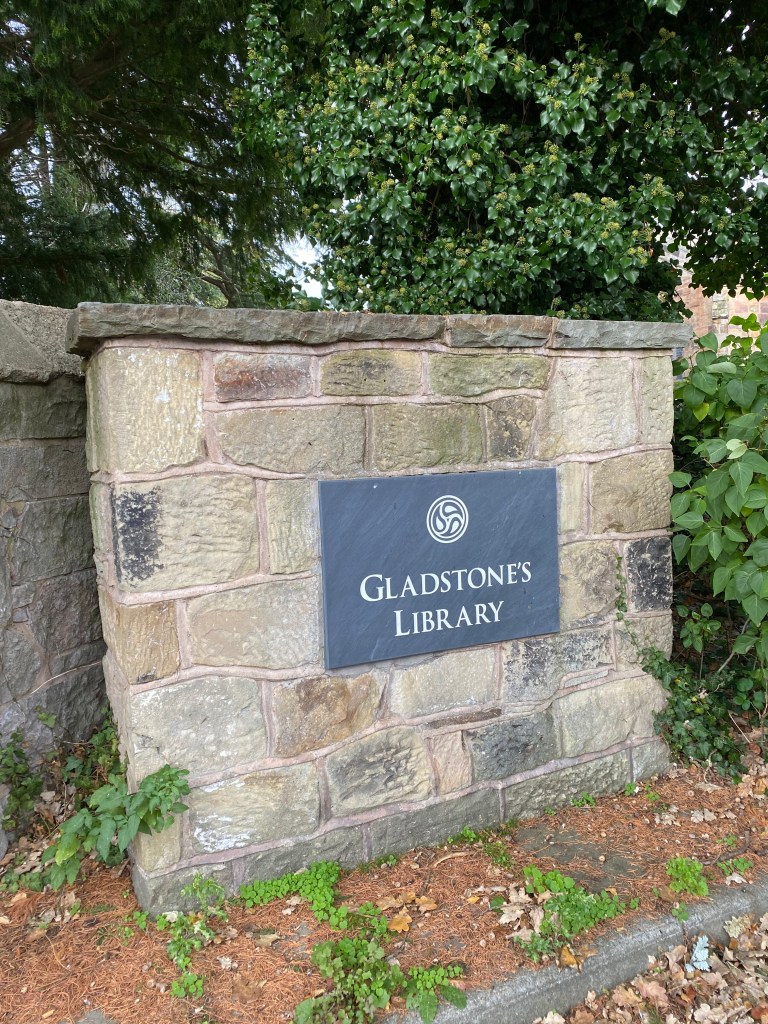
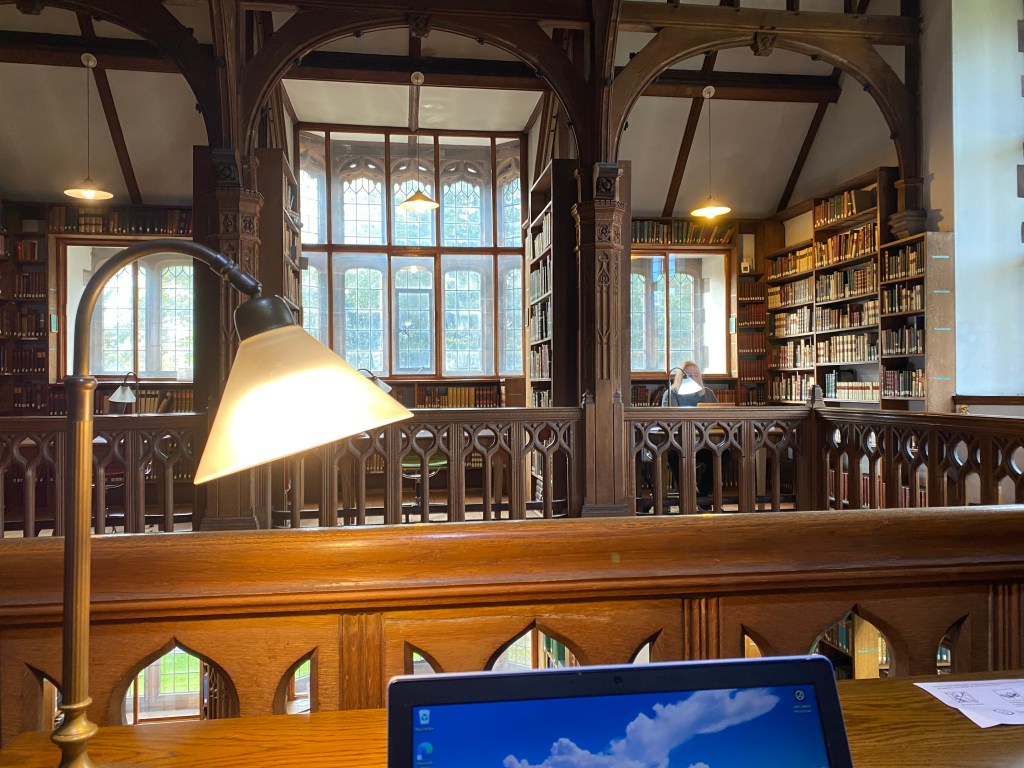
Gladstone’s Library in Wales has always been on my writerly radar. Who wouldn’t want to sleep in a place of books, right?! Just for clarity, rooms are provided, but the actual reading rooms are open to residents all day and after hours, giving you full access not only to a range of historic tomes, but unlimited inspiration between the stacks. Each nook and cranny houses a wee desk for your writing endeavours, and a cannily placed notice will ‘bag’ your chosen spot overnight. Consistency is key to writing- I immediately settle into my work when I know where I’ll be sitting. Must be muscle memory!

The current building, raised in 1902 by public subscription and designed by John Douglas, is the home of Sir William Gladstone’s unique archival collection. In the 1880s, after retiring from politics, Gladstone began transferring his collection to a purpose-built corrugated -iron library in Hawarden village. Scholars would stay in a hostel attached to the library.

The reading rooms are delightfully silent and creaky all at the same time, and the building itself is beautifully designed. I particularly loved the lounge with its roaring stoves and leather couches you can just sink into after a day hunched over the laptop. I was very lucky to be in the company of my buddies Dawn Geddes, Elizabeth Frattaroli and Gillian Duff, wonderful writers all, and the best companions I could have wished for. We ate amazing food (shout-out to Food for Thought and the cafes and pubs of Hawarden) wandered the streets, wrote words and gossiped a lot (quietly, of course…it’s a library. Sssh!) and generally soaked up the atmosphere. After delivering The Legend of Lady Godiva to my publisher the week before, I let myself sink back into my folk horror novel The Back of Beyond. It was like spending time with an old (but rather mysterious) friend.

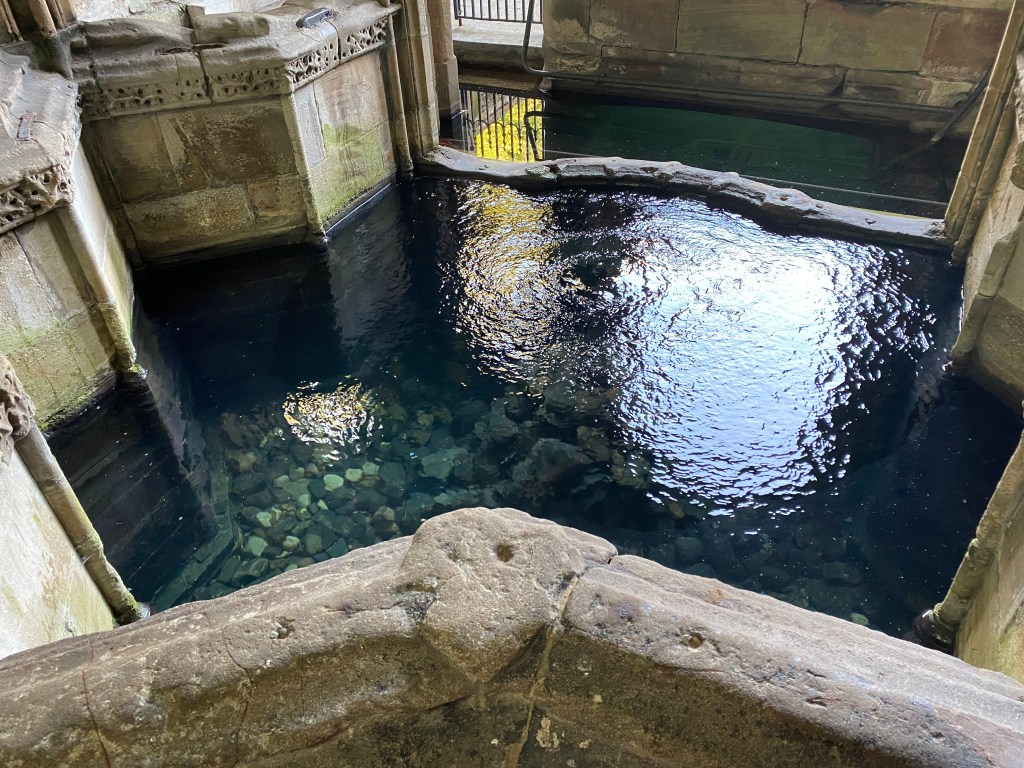
On the way home, we visited St Winefride’s Well (Welsh: Ffynnon Wenffrewi) a holy well and national shrine located in the town of Holywell in Flintshire, Wales. The patron saint of the well, St Winefride, was a 7th-century Catholic martyr who according to legend was decapitated by a lustful prince and then miraculously restored to life. The well is said to have sprung up at the spot where her head hit the ground. This story is first recorded in the 12th century, and since then St Winefride’s Well has been a popular pilgrimage destination, known for its healing waters. Given my novel is about a sacred well with exactly the opposite effect, it was an interesting visit for me!

If you ever get a chance to visit Gladstone’s Library, go! Society of Authors members receive a discount, which really helps a lot and it was a privilege to be allowed access to such an amazing collection.

From Fiction to History

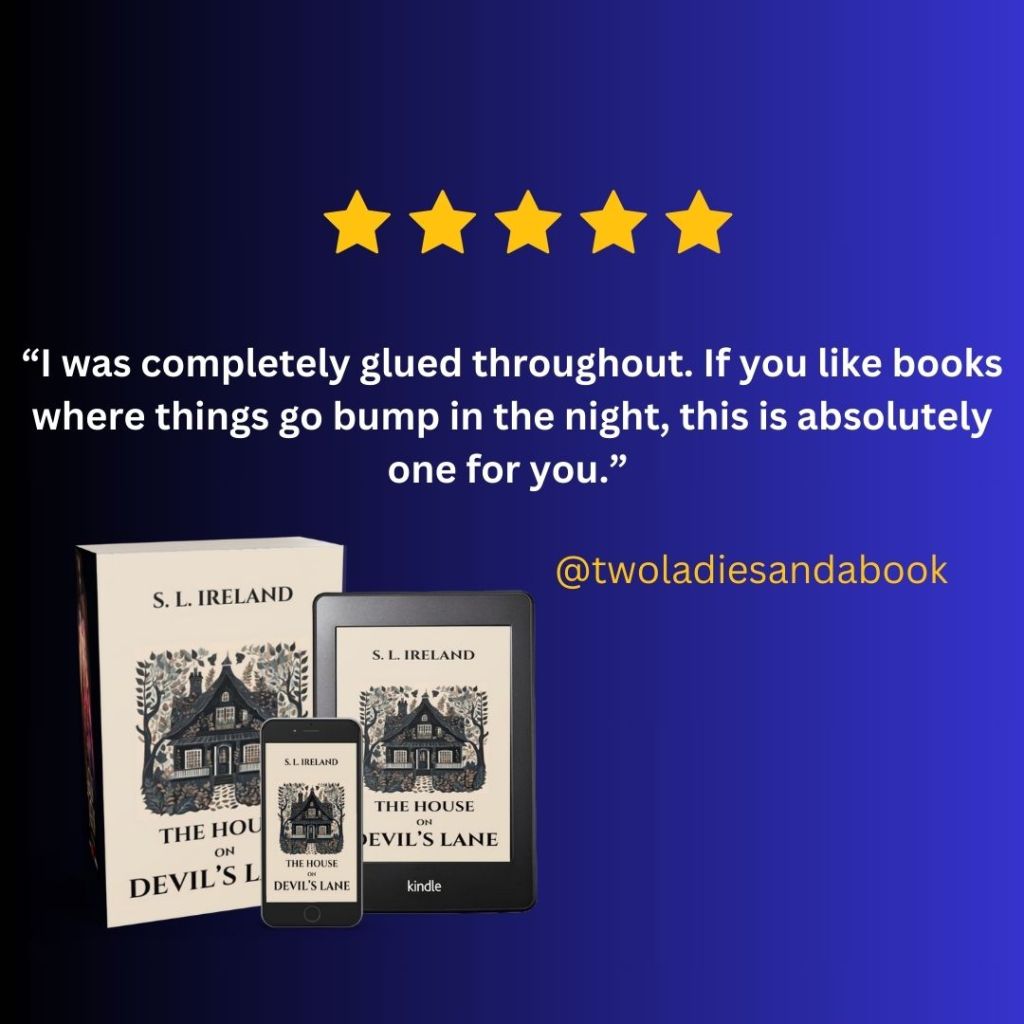
As we progress through 2025, it is always worthwhile to reflect on the writing journey so far, and one significant milestone for me in recent months has been the publication of The House on Devil’s Lane. This novel, which guides readers through a suspenseful narrative filled with mysterious and unsettling events on an apparently ordinary street, began as a tentative foray into the world of self-publishing. Certainly, there are things I did wrong, and different decisions I might have taken, but the reception the novel has received has exceeded my expectations in a very good way!

I’m incredibly grateful for all the readers who have taken the time to write a review. Many have praised its intricate plotting, well-developed characters, and the chilling atmosphere that keeps readers on the edge of their seats. Indeed, the overwhelming support and enthusiasm from readers have been incredibly humbling and motivating.

This year, I have stepped away from fiction for a while to embark on a new literary venture that delves into the fascinating world of historical non-fiction. I am thrilled to be working with Pen and Sword Books on my upcoming project, The Legend of Lady Godiva. This book aims to shed light on the life and legacy of one of England’s most iconic figures, the legendary Lady Godiva.

Fascinating Facts about Lady Godiva

  • Lady Godiva was the grandmother of Ealdgyth, queen consort of Welsh King Gruffydd ap Llywelyn and later King Harold of arrow-in-the-eye fame. This connection places her within the intricate web of medieval royalty and politics.
  • The story of Peeping Tom, who allegedly spied on her legendary naked ride, may have been invented as a joke by Royalist soldiers. This mischievous addition to the tale adds an interesting layer of myth and legend to her story.
  • Godiva and her husband, Leofric, once occupied a hunting lodge in Kings Bromley. Up until recently, a modest modern bungalow stood in its place, boasting beams made with the timber of that long-lost dwelling!

Of the many artworks that feature Godiva, or Godgifu (Good or God gift), this is one of my favourites. This is a preparatory sketch by illustrator Henry Hugh Armistead.

Why Lady Godiva?

You might wonder, why Lady Godiva? The story of her legendary ride through Coventry is one that has fascinated me since childhood. The blend of historical fact and myth, the themes of bravery, sacrifice, and the fight against oppression, all resonate deeply with me. I am excited to be bringing to life the ‘real’ story of Lady Godiva, a tale that is as compelling and inspiring as any fictional narrative.

Looking Ahead

The journey from fiction to history has been incredibly rewarding, and I am eager to share this new book with you all in due course. Stay tuned for more updates on its progress, and thank you for your continued support and enthusiasm for my work.

In the meantime, if you haven’t yet read The House on Devil’s Lane, I encourage you to pick up a copy and join the adventure. Starting on Saturday, Feb 15th, the ebook will be available FREE for five days only!

Thank you for being a part of this incredible journey. Your feedback and reviews mean the world to me and help fuel my passion for storytelling. Here’s to many more stories to come!

And if you would like to write some of your own, please check out my creative writing courses page to find out what’s happening!

How To Live In A Haunted House, Part II

So, a second part to this story, and a second house! Last time, I told you about my Irish ghost. Fast forward to the 1990s, and I am living in a rather old fisherman’s cottage on the east coast of Scotland. The Deeds mention the date 1839, but that was the first formal registration of this house. There was an ancient, thatched dwelling on this site long before that. The sea boulder walls are two-foot thick, which plays havoc with the phone signal, but serves as a constant reminder of the need to keep out the North Sea gales.

What lurks within these walls? Nothing spooky at the moment. The house is at rest, but it wasn’t always so. For a brief period in the 90s, during a time when my neighbours were digging foundations for a new extension, I firmly believe that something was disturbed.

It began with random things we couldn’t explain. The smell of leather when we entered the house, and the sound of breaking glass. Yes, the sound of glass being smashed, or dropped from a height. My father was around at the time- the most ardent of non-believers!- and even he heard it. He went to great lengths to discover the cause, searching the attic and all through the house. The workmen next door had downed tools for the weekend, and there was no one else around, and anyway, we both agreed that the smashing sound had come from inside the house. There seemed to be no explanation.

Other spooky happenings followed. One of my sons woke up in terror having dreamed of ‘soldiers with dragon’s heads’ and I had a nightmare about a headless man on the beach. Worse, I woke up one night to the sound of asthmatic breathing. My first thought was to check on the family, and once I’d confirmed that everyone was sleeping peacefully. I climbed back into bed, only to dream about a heavy-breathing soldier standing at the door of my bedroom…

It’s easy to pass such things off as nightmares, imagination or whatever. But worse was to come. One night, I was awoken by the sensation of someone sitting on my side of the bed. The mattress tilted, and I opened my eyes and sat up, fully expecting to see that my husband, perhaps unable to sleep, sitting on my side of the bed.

But he was fast asleep beside me and there was nobody there…

Ghostly activity or over-active imagination?! I still cannot decide, although it’s strange that all the phenomena ended as soon as the excavations were done. Did someone or something object to their rest being disturbed? My home is just metres from a coastline once a magnet for Danish raiders. There have been battles on this soil, and shipwrecks out at sea. Past inhabitants of this cottage lived on the edge for generations, and not all their stories were happy ones.

It certainly makes you wonder. I will not be building an extension anytime soon!

On a lighter note, here are my recommendations for some dark-ish Halloween reading/listening/viewing.

  • The Uncanny Podcast, The best! Danny Robins is a master of spooky storytelling and his army of listeners make his job easy. The tales of ordinary folk are always the most scary. Danny has a Halloween ‘advent calendar’ of spooky soundbites plus some full length episodes to come. Available on BBC Sounds.
  • ‘The Gloaming’. This is an Australian folk horror/crime drama set in Tasmania. Lots of creepy settings, rituals and people driving around in the dark. Love it! Available on STV Player.
  • Horrorstor by Grady Hendrix. I love his writing, and I’ve just finished How to Sell a Haunted House which was good, but for me, Horrorstor is the best, You’ll never look at Ikea in the same way again. Proof that any setting can be haunted in the right hands!

And of course, you could always buy my latest book…!