From Fiction to History

As we progress through 2025, it is always worthwhile to reflect on the writing journey so far, and one significant milestone for me in recent months has been the publication of The House on Devil’s Lane. This novel, which guides readers through a suspenseful narrative filled with mysterious and unsettling events on an apparently ordinary street, began as a tentative foray into the world of self-publishing. Certainly, there are things I did wrong, and different decisions I might have taken, but the reception the novel has received has exceeded my expectations in a very good way!

I’m incredibly grateful for all the readers who have taken the time to write a review. Many have praised its intricate plotting, well-developed characters, and the chilling atmosphere that keeps readers on the edge of their seats. Indeed, the overwhelming support and enthusiasm from readers have been incredibly humbling and motivating.

This year, I have stepped away from fiction for a while to embark on a new literary venture that delves into the fascinating world of historical non-fiction. I am thrilled to be working with Pen and Sword Books on my upcoming project, The Legend of Lady Godiva. This book aims to shed light on the life and legacy of one of England’s most iconic figures, the legendary Lady Godiva.

Fascinating Facts about Lady Godiva

  • Lady Godiva was the grandmother of Ealdgyth, queen consort of Welsh King Gruffydd ap Llywelyn and later King Harold of arrow-in-the-eye fame. This connection places her within the intricate web of medieval royalty and politics.
  • The story of Peeping Tom, who allegedly spied on her legendary naked ride, may have been invented as a joke by Royalist soldiers. This mischievous addition to the tale adds an interesting layer of myth and legend to her story.
  • Godiva and her husband, Leofric, once occupied a hunting lodge in Kings Bromley. Up until recently, a modest modern bungalow stood in its place, boasting beams made with the timber of that long-lost dwelling!

Of the many artworks that feature Godiva, or Godgifu (Good or God gift), this is one of my favourites. This is a preparatory sketch by illustrator Henry Hugh Armistead.

Why Lady Godiva?

You might wonder, why Lady Godiva? The story of her legendary ride through Coventry is one that has fascinated me since childhood. The blend of historical fact and myth, the themes of bravery, sacrifice, and the fight against oppression, all resonate deeply with me. I am excited to be bringing to life the ‘real’ story of Lady Godiva, a tale that is as compelling and inspiring as any fictional narrative.

Looking Ahead

The journey from fiction to history has been incredibly rewarding, and I am eager to share this new book with you all in due course. Stay tuned for more updates on its progress, and thank you for your continued support and enthusiasm for my work.

In the meantime, if you haven’t yet read The House on Devil’s Lane, I encourage you to pick up a copy and join the adventure. Starting on Saturday, Feb 15th, the ebook will be available FREE for five days only!

Thank you for being a part of this incredible journey. Your feedback and reviews mean the world to me and help fuel my passion for storytelling. Here’s to many more stories to come!

And if you would like to write some of your own, please check out my creative writing courses page to find out what’s happening!

True North

Last week, I took an exciting trip back to my roots!

Vic Watson and Jacky Collins, organisers of  Newcastle Noir kindly invited me along to Noir @ the Bar, in the Town Wall, Newcastle. Newcastle Noir is a literary festival celebrating the best in contemporary crime writing, bringing together writers from the North East, across Britain, as well as from further afield. By all accounts, the 2017 festival was a huge success, and it’s already on my calendar for next year! Noir@the Bar (there are quite a few versions of this across the country) is a fun, informal evening of readings…in a pub. Writers’ paradise, pretty much!

When I last visited Newcastle, I was too young to drink, but unfortunately, on this occasion, the bar staff saw no need to I.D. me. We had a fabulous night in a great venue, and I really enjoyed listening to chilling extracts from some must-read novels and short stories.

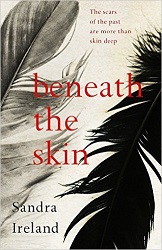
I chose to read the opening pages from my novel Beneath the Skin, and I was very conscious that my central character, Walt, was  coming home too. As a nod to my own upbringing, Walt grew up in rural Northumberland, but I could just imagine him meeting his mates for a few pints in a place like the Town Wall, having a laugh and a bit of banter. Beneath the Skin is about what happens when the laughter stops. When you come home but your best mate doesn’t. It’s about how trauma changes people.


bts very small

Beneath the Skin (Polygon)

My trip ‘down south’ was much too brief, but I couldn’t pass up the chance to check out a few Gothic locations for my next project….!


20170427_14123320170427_14143220170427_14153020170427_141635

November Thoughts

The topic I’m about to write about is always hovering not far from my consciousness. This week, of all weeks, it feels like a good time to commit some of my thoughts to virtual paper. Since the launch of Beneath the Skin in September, I’ve been very busy with author events and interviews. I’ve even ‘appeared’ on radio –Booked on Pulse 98.4FM -which is a first for me! Invariably, the question which crops up the most is this:

Your main character Walt is suffering from PTSD. How difficult was it to write about this?

In the run up to Remembrance Day, when our thoughts turn to those who have lost their lives, or have been wounded, in the line of duty – now seems a fitting time to address this question, and the challenges I faced in developing the character of Walt.

Robert ‘Walt’ Walton is an ex-soldier who has been physically, emotionally and mentally scarred by his time on the front -line. His way of dealing with his trauma is to run. Walt runs away from his home, from his family, from his mates, and finds himself in Edinburgh, staring into the window of a taxidermist’s studio. Taking on the role of the taxidermist’s assistant is possibly the worst job choice Walt could have made. He’s faced with the ‘undead’ on a daily basis, and the other inhabitants of the household; Alys the taxidermist, her sister Mouse and little William, are in the grip of their own dark past.

My first challenge was writing the novel in the voice of a man, and a man who’s experienced things I can only imagine. I’ve never walked in his boots. I’ve never been to war, or suffered injury. I’ve never killed anyone or experienced extreme violence. Therein lies the skill of the writer, you might say, but imagination carries responsibility. Walt may be a fictional character, but I was very aware that for many, many people Walt’s situation is all too real. As soon as you put a label on a character (Walt has PTSD; Alys has an undiagnosed spectrum disorder), you have a responsibility to get it right.

I spent a lot of time talking to people- former soldiers and their families, physiotherapists, medical personnel. I watched documentaries, read diaries, accounts and, interestingly, poetry. Two evocative and haunting books which inspired and informed me are pictured below. Helmand: Diaries of Front-Line Soldiers (Osprey Publishing), edited by Simon Weston and ‘Heroes: 100 Poems from the New Generation of War Poets’ (Ebury Press), which is sold in aid of ABF The Soldiers’ Charity. Poetry is the greatest expression of emotion, and it’s Walt’s emotional life that I want the reader to invest in, rather than the nuts and bolts of conflict. The fact that the poetry of the ‘old generation’ of war poets- Sassoon, Graves, et al- is still so hauntingly relevant to us tells its own story.

So Beneath the Skin– a work of fiction, and of course I hope you will be entertained and enthralled by it. But I also hope you will close the book understanding a little more about the ticking time bomb of PTSD that dwells among us. I hope it makes us a little gentler with each other. I hope it makes us think.

‘Ireland writes about powerful and troubling subjects and shows how the past can have devastating consequences’ – Daily Mailhelmand-books